Monday, May 31, 2010
Solitude for young parents . . .
Our hearts for young families prompt us to remind husbands and wives (parents) that one of the most precious gifts you can give each other is that of solitude. TIME . . . to be away, to be quiet and listen, to seek His face. Jesus modeled this often for us, so it must be good for us, very good, and we find that to be true.


Sunday, May 23, 2010
On reading, writing and telling . . . a tribute to Anne Morrow Lindbergh
I suppose it was because I was an avid reader as a child that I became an avid writer later, and now an avid storyteller in my “golden years”? I have had many “mentors” in the area of communication; many who have inspired my own path to express something of life to and for others. The list is far too long to mention, and also very eclectic as my tastes in literature and music have always been. From Steinbeck, Frost and Hemingway, to so many of the Christian saints across the years. From philosophers, to poets, to tellers of tall tales.
Often, we find an author or teller with whom our hearts ring ever so true. We may regret that we didn’t write or say it first, or we may simply say, “Ah yes!” You no doubt have had those times when the truth could never be more true, and voice (aloud or silently) your total agreement. Recently, I came across a book called Gift From The Sea by Anne Morrow Lindbergh, and much in this book causes me to say, “Ah yes.”
I know much of my delight lies in the setting of the beach and ocean, a special place for me and my family forever. But there is also something in the simple, earthy truths for life and living that Lindbergh expresses which touch my heart and soul. As Eugene Peterson puts it, “God’s unforced rhythms of grace,” that is what Lindbergh seems to be expressing directly or indirectly throughout the book.
As I said, I would have liked to have written much of this, or at least given my own version of it, but she has done it so well, that nothing remains to be said by this old teller of tales. So, as I’m prone to do when I discover a treasure, I share some of it here with you:
“The beach is not the place to work; to read, write or think. I should have remembered that from other years. Hopefully, one carries down the faded straw bag, lumpy with books, clean paper, long-overdue unanswered letters, freshly-sharpened pencils, lists and good intentions. The books remain unread, the pencils break their points, and the pads rest smooth, unblemished as the cloudless sky. No reading, no writing, no thoughts even - at least, not at first. One becomes, in fact, like the element on which one lies, flattened by the sea: bare, open, empty as the beach erased by today's tides of all yesterday's scribblings. The mind begins to drift, to play, to turn over in gentle careless rolls like those lazy waves on the beach. One never knows what chance treasures these easy unconscious rollers may toss up on the smooth white sand of the conscious mind. But it must not be fought for or - heaven forbid! - dug for. No, no dredging of the sea bottom here: that would defeat one's purpose. The sea does not reward those who are too anxious, too greedy or too impa¬tient. To dig for treasures shows not only impatience and greed, but lack of faith. Patience, patience, patience is what the sea teaches. Patience and faith. One should lie empty, open, choiceless as a beach - waiting for a gift from the sea.
I want singleness of eye, a purity of intention, a central core to my life that will enable me to carry out all my obligations and activities as well as I can. I want, in fact - to borrow from the language of the saints - to live 'in grace' as much of the time as possible. I am not using this term in a strictly theological sense: by grace I mean an inner harmony, essentially spiritual, which can be translated into outward harmony. I am seeking, perhaps, what Socrates asked for in the prayer from the Phaedrus when he said, 'May the outward and inward man be one.' I would like to achieve a state of inner spiritual grace from which I could func¬tion and give as I was meant to in the eyes of God. There are times when one seems to carry all one's tasks before one lightly, as if borne along on a great tide. And in the opposite state one can hardly tie a shoe-string. It is true that a large part of life consists in learning a technique of tying the shoe-string -whether one is 'in grace' or not. I believe most people are aware of periods in their lives when they seem to be 'in grace' and other periods when they feel 'out of grace', even though they may use different words to describe these states.
This next excerpt I include in honor of my mother and my wife, but also in honor of all the other wonderful women I know: (But do read it guys, it’s good for us.)
Certain environments, certain modes of life, certain rules of con¬duct are more conducive to inner and outer harmony than others. There are, in fact, certain roads that one may follow. Simplification of life is one of them. I mean to follow a simple life. But I do not. I find that my form of life does not foster simplicity: the life I have chosen as wife and mother entrains a whole caravan of complications. It involves food and shelter, meals, planning, marketing, bills and making ends meet in a thousand ways. It involves friends, my husband's, my children's and my own, and endless arrangements to get together: letters, invitations, telephone calls and transportation hither and yon. What a circus act we women perform every day of our lives. It puts the trapeze artist to shame. Look at us! This is not the life of simplicity, but the life of multiplicity that the wise warn us of. It leads not to unification but to fragmentation. Distraction is, always has been, and probably always will be, inherent in women's lives. We must be open to all points of the compass; husband, children, friends, home, community; stretched mil, exposed like a spider's web to each breeze that blows, to each call that comes. How difficult for us, then, to achieve a balance in the midst of these contradictory tensions; and yet how necessary for the proper functioning of our lives. How much we need, and how arduous of attainment is that steadiness preached in all rules of holy living. How desirable and distant is the ideal of the con-templative, artist, or saint - the inner inviolable core, the single eye. With new awareness, both painful and humorous, I begin to understand why the saints were rarely married women. I am con¬vinced it has nothing inherently to do, as I once supposed, with chastity or children. It has to do primarily with distractions. The bearing, rearing, feeding and educating of children; the running of a house with its thousand details; human relationships with their myriad pulls - women's normal occupations in general run counter to creative life, or contemplative life, or saintly life. Woman instinctively wants to give, yet resents giving herself in small pieces. I believe that what she resents is not so much giving herself in pieces as giving herself purposelessly. What we fear is not so much that our energy may be leaking away through small outlets as that it may be going 'down the drain'. Purposeful giving is not as apt to deplete one's resources: it belongs to that natural order of giving that seems to renew itself even in the act of depletion. The more one gives, the more one has to give - like milk in the breast.
The problem is: how to remain in the midst of the distractions of life; how to remain balanced, no matter what centrifugal forces tend to pull one off centre; how to remain strong, no matter what shocks come in at the periphery and tend to crack the hub of the wheel. What is the answer? There is no easy answer; no complete answer. I have only clues - shells from the sea. One answer, and perhaps a first step, is in the simplification of life; in cutting out some of the distractions. But how? Total retire¬ment is not possible. I cannot permanently inhabit a desert island. I cannot be a nun in the midst of family life. I would not want to be. The solution for me, surely, is neither in total renunciation of the world, nor in total acceptance of it. I must find a balance somewhere, or an alternating rhythm between these two extremes: a swinging of the pendulum between solitude and communion, between retreat and return. In my periods of retreat, perhaps I can learn something to carry back into my worldly life. One cannot collect all the beautiful shells on the beach. One can collect only a few; and they are more beautiful if they are few. My life at home, I begin to realize, lacks this quality of signifi¬cance, and therefore of beauty, because there is so little empty space. The space is scribbled on; the time has been filled. There are so few empty pages in my engagement pad, or empty hours in the day, or empty rooms in my life in which to stand alone and find myself. Too many activities, and people, and things. Too many worthy activities, valuable things and interesting people. For it is not merely the trivial that clutters our lives, but the important as well. We can have a surfeit of treasures and excess of shells - where one or two would be significant.
It is a difficult lesson to learn today - to leave one's friends and family and deliberately practice the art of solitude for an hour, or a day, or a week. For me, the break is the most difficult. Parting is inevitably painful, even for a short time. It is like an amputation, I feel. A limb being torn off, without which I shall be unable to I function. And yet, once it is done, I find there is a quality to being alone that is incredibly precious. Life rushes back into the void, richer, more vivid, fuller than before. It is as if, in parting, one did actually lose an arm. And then, like the starfish, one grows it anew; one is whole again, complete and round - more whole, even, than before.
It is not the desert island, nor the stony wilderness, that cuts you off from the people you love: it is the wilderness in the mind, the desert wastes in the heart through which one wanders lost - a stranger to oneself and estranged from others too. If one is out of touch with oneself, then one cannot touch others. How often in a large city, shaking hands with my friends, I have felt the wilderness stretching between us. Both of us were wandering in arid wastes, having lost the springs that nourished us, or having found them dry. Only when one is connected to one's own core is one connected to others, I am beginning to discover. And for me the core, the inner spring, can best be found through solitude. We are all, in the last analysis, alone. How one hates to think of oneself as alone. How one avoids it - it seems to imply rejec¬tion or unpopularity. We seem so frightened today of being alone that we never let it happen. Even if family, friends and movies should fail, there is still the radio or television to fill up the void. Women, who used to complain of loneliness, need never be alone any more. We can do our housework with soap-opera heroes at our side. Even day-dreaming was more creative than this: it demanded something of oneself and it fed the inner life. Now, instead of planting our own dream blossoms, we choke the space with continuous music, chatter and companionship to which we do not even listen. It is simply there to fill the vacuum. When the noise stops there is no inner music to take its place.
We must re-learn to be alone.
If it is our function to give, we must be replenished too. But how? Everyone should be alone sometime during the year, some part of each week, and each day. If they were convinced that a day off, or an hour of solitude, was a reasonable ambition, they would find a way of attaining it. As it is, they feel so unjustified in this demand I hat they rarely make an attempt. The world does not understand, in either man or woman, the need to be alone. How inexplicable it seems. Anything else will be accepted as a better excuse. If one sets aside time for a busi¬ness appointment, a trip to the hairdresser, a social engagement, or a shopping expedition, that time is accepted as inviolable. But if one says: I cannot come because that is my hour to be alone; one is considered rude, egotistical or strange. What a commentary on our civilization, when being alone is considered suspect; when one has to apologize for it, make excuses, hide the fact that one practices it - like a secret vice! Certain springs are tapped only when we are alone. The artist knows he must be alone to create; the writer, to work out his thoughts; the musician to compose; the saint, to pray. The problem is not entirely in finding the room of one's own time alone, difficult and necessary as this is. The problem is more how to still the soul in the midst of its activities. In fact the problem is how to feed the soul. I must try to be alone for part of each year, even a week or a few days; and for part of each day, even an hour or a few minutes, in order to keep my core, my centre, my island-quality. Unless I keep the island-quality intact somewhere within me, I will have little to give my husband, my children, my friends or the world at large.
The tide of life recedes. The house, with its bulging sleeping porches and sheds, begins little by little to empty. The children go away to school and then to marriage and lives of their own. Most people by middle age have attained, or ceased to struggle to attain, their place in the world. That terrific tenacity to life, to place, to people, to material surroundings and accumulations: is it as necessary as it was when one was struggling for security or the security of one's children? Many of the physical struggles have ceased, due either to success or failure. Does the shell need to be so welded to its rock? Married couples are apt to find themselves in middle age, high and dry in an outmoded shell, in a fortress which has outlived its function. Perhaps middle age is, or should be, a period of shedding shells: the shell of ambition, the shell of material accumulations and possessions, the shell of the ego. Perhaps one can shed, at this stage in life one's pride, one's false ambitions, one's mask, one's armour. Was that armour not put on to protect one from the com-petitive world? If one ceases to compete, does one need it? Perhaps one can at last in middle age, if not earlier, be completely oneself; and what a liberation that would be! So beautiful is the still hour of the sea's withdrawal, as beauti¬ful as the sea's return when encroaching waves pound up the beach, pressing to reach those dark rumpled chains of seaweed which mark the last high tide.
We have so little faith in the ebb and flow of life, of love, of relationships. We leap at the flow of the tide and resist in terror its ebb. We are afraid it will never return. We insist on permanence, on duration, on continuity; when the only continuity possible, in life as in love, is in growth, in fluidity - in freedom in the sense that dancers are free, barely touching as they pass, but partners in the same pattern. The only real security is not in owning or possessing, not in demanding or expecting, not in hoping even. Security in a relationship lies neither in looking back to what it was in nostalgia, nor forward to what it might be in dread or anticipation, but living in the present relationship and accepting it as it is now.
When we start at the centre of ourselves, we discover something worthwhile extending toward the periphery of the circle. We find again some of the joy in the now, some of the peace in the here, some of the love in me and thee which go to make up the king¬dom of heaven on earth.
The waves echo behind me. Patience - Faith - Openness are what the sea has to teach; Simplicity - Solitude - Intermittency. But there are other beaches to explore. There are more shells to find. This is only a beginning.”
And so we end with another sense or theme; that of the journey, one characterized by God’s unforced rhythms of grace along the way. For me personally it is The Narrow Road – A Journey of Hope – Along the Good Red Road of Jesus Christ. I hope to see you along the way, to share our stories and encourage one another as we press on, knowing what lies ahead, and what He is restoring us for.
only by Grace,
pat
a postscript: Anne Morrow Lindbergh is not necessarily one of my favorite authors, nor someone I would consider a mentor, but I have found that is better to investigate things than cast them off due to a first impression or accumulated prejudices. I have found much in Gift From The Sea to inspire me, and keep me searching and seeking for God’s gift
Often, we find an author or teller with whom our hearts ring ever so true. We may regret that we didn’t write or say it first, or we may simply say, “Ah yes!” You no doubt have had those times when the truth could never be more true, and voice (aloud or silently) your total agreement. Recently, I came across a book called Gift From The Sea by Anne Morrow Lindbergh, and much in this book causes me to say, “Ah yes.”
I know much of my delight lies in the setting of the beach and ocean, a special place for me and my family forever. But there is also something in the simple, earthy truths for life and living that Lindbergh expresses which touch my heart and soul. As Eugene Peterson puts it, “God’s unforced rhythms of grace,” that is what Lindbergh seems to be expressing directly or indirectly throughout the book.
As I said, I would have liked to have written much of this, or at least given my own version of it, but she has done it so well, that nothing remains to be said by this old teller of tales. So, as I’m prone to do when I discover a treasure, I share some of it here with you:
“The beach is not the place to work; to read, write or think. I should have remembered that from other years. Hopefully, one carries down the faded straw bag, lumpy with books, clean paper, long-overdue unanswered letters, freshly-sharpened pencils, lists and good intentions. The books remain unread, the pencils break their points, and the pads rest smooth, unblemished as the cloudless sky. No reading, no writing, no thoughts even - at least, not at first. One becomes, in fact, like the element on which one lies, flattened by the sea: bare, open, empty as the beach erased by today's tides of all yesterday's scribblings. The mind begins to drift, to play, to turn over in gentle careless rolls like those lazy waves on the beach. One never knows what chance treasures these easy unconscious rollers may toss up on the smooth white sand of the conscious mind. But it must not be fought for or - heaven forbid! - dug for. No, no dredging of the sea bottom here: that would defeat one's purpose. The sea does not reward those who are too anxious, too greedy or too impa¬tient. To dig for treasures shows not only impatience and greed, but lack of faith. Patience, patience, patience is what the sea teaches. Patience and faith. One should lie empty, open, choiceless as a beach - waiting for a gift from the sea.
I want singleness of eye, a purity of intention, a central core to my life that will enable me to carry out all my obligations and activities as well as I can. I want, in fact - to borrow from the language of the saints - to live 'in grace' as much of the time as possible. I am not using this term in a strictly theological sense: by grace I mean an inner harmony, essentially spiritual, which can be translated into outward harmony. I am seeking, perhaps, what Socrates asked for in the prayer from the Phaedrus when he said, 'May the outward and inward man be one.' I would like to achieve a state of inner spiritual grace from which I could func¬tion and give as I was meant to in the eyes of God. There are times when one seems to carry all one's tasks before one lightly, as if borne along on a great tide. And in the opposite state one can hardly tie a shoe-string. It is true that a large part of life consists in learning a technique of tying the shoe-string -whether one is 'in grace' or not. I believe most people are aware of periods in their lives when they seem to be 'in grace' and other periods when they feel 'out of grace', even though they may use different words to describe these states.
This next excerpt I include in honor of my mother and my wife, but also in honor of all the other wonderful women I know: (But do read it guys, it’s good for us.)
Certain environments, certain modes of life, certain rules of con¬duct are more conducive to inner and outer harmony than others. There are, in fact, certain roads that one may follow. Simplification of life is one of them. I mean to follow a simple life. But I do not. I find that my form of life does not foster simplicity: the life I have chosen as wife and mother entrains a whole caravan of complications. It involves food and shelter, meals, planning, marketing, bills and making ends meet in a thousand ways. It involves friends, my husband's, my children's and my own, and endless arrangements to get together: letters, invitations, telephone calls and transportation hither and yon. What a circus act we women perform every day of our lives. It puts the trapeze artist to shame. Look at us! This is not the life of simplicity, but the life of multiplicity that the wise warn us of. It leads not to unification but to fragmentation. Distraction is, always has been, and probably always will be, inherent in women's lives. We must be open to all points of the compass; husband, children, friends, home, community; stretched mil, exposed like a spider's web to each breeze that blows, to each call that comes. How difficult for us, then, to achieve a balance in the midst of these contradictory tensions; and yet how necessary for the proper functioning of our lives. How much we need, and how arduous of attainment is that steadiness preached in all rules of holy living. How desirable and distant is the ideal of the con-templative, artist, or saint - the inner inviolable core, the single eye. With new awareness, both painful and humorous, I begin to understand why the saints were rarely married women. I am con¬vinced it has nothing inherently to do, as I once supposed, with chastity or children. It has to do primarily with distractions. The bearing, rearing, feeding and educating of children; the running of a house with its thousand details; human relationships with their myriad pulls - women's normal occupations in general run counter to creative life, or contemplative life, or saintly life. Woman instinctively wants to give, yet resents giving herself in small pieces. I believe that what she resents is not so much giving herself in pieces as giving herself purposelessly. What we fear is not so much that our energy may be leaking away through small outlets as that it may be going 'down the drain'. Purposeful giving is not as apt to deplete one's resources: it belongs to that natural order of giving that seems to renew itself even in the act of depletion. The more one gives, the more one has to give - like milk in the breast.
The problem is: how to remain in the midst of the distractions of life; how to remain balanced, no matter what centrifugal forces tend to pull one off centre; how to remain strong, no matter what shocks come in at the periphery and tend to crack the hub of the wheel. What is the answer? There is no easy answer; no complete answer. I have only clues - shells from the sea. One answer, and perhaps a first step, is in the simplification of life; in cutting out some of the distractions. But how? Total retire¬ment is not possible. I cannot permanently inhabit a desert island. I cannot be a nun in the midst of family life. I would not want to be. The solution for me, surely, is neither in total renunciation of the world, nor in total acceptance of it. I must find a balance somewhere, or an alternating rhythm between these two extremes: a swinging of the pendulum between solitude and communion, between retreat and return. In my periods of retreat, perhaps I can learn something to carry back into my worldly life. One cannot collect all the beautiful shells on the beach. One can collect only a few; and they are more beautiful if they are few. My life at home, I begin to realize, lacks this quality of signifi¬cance, and therefore of beauty, because there is so little empty space. The space is scribbled on; the time has been filled. There are so few empty pages in my engagement pad, or empty hours in the day, or empty rooms in my life in which to stand alone and find myself. Too many activities, and people, and things. Too many worthy activities, valuable things and interesting people. For it is not merely the trivial that clutters our lives, but the important as well. We can have a surfeit of treasures and excess of shells - where one or two would be significant.
It is a difficult lesson to learn today - to leave one's friends and family and deliberately practice the art of solitude for an hour, or a day, or a week. For me, the break is the most difficult. Parting is inevitably painful, even for a short time. It is like an amputation, I feel. A limb being torn off, without which I shall be unable to I function. And yet, once it is done, I find there is a quality to being alone that is incredibly precious. Life rushes back into the void, richer, more vivid, fuller than before. It is as if, in parting, one did actually lose an arm. And then, like the starfish, one grows it anew; one is whole again, complete and round - more whole, even, than before.
It is not the desert island, nor the stony wilderness, that cuts you off from the people you love: it is the wilderness in the mind, the desert wastes in the heart through which one wanders lost - a stranger to oneself and estranged from others too. If one is out of touch with oneself, then one cannot touch others. How often in a large city, shaking hands with my friends, I have felt the wilderness stretching between us. Both of us were wandering in arid wastes, having lost the springs that nourished us, or having found them dry. Only when one is connected to one's own core is one connected to others, I am beginning to discover. And for me the core, the inner spring, can best be found through solitude. We are all, in the last analysis, alone. How one hates to think of oneself as alone. How one avoids it - it seems to imply rejec¬tion or unpopularity. We seem so frightened today of being alone that we never let it happen. Even if family, friends and movies should fail, there is still the radio or television to fill up the void. Women, who used to complain of loneliness, need never be alone any more. We can do our housework with soap-opera heroes at our side. Even day-dreaming was more creative than this: it demanded something of oneself and it fed the inner life. Now, instead of planting our own dream blossoms, we choke the space with continuous music, chatter and companionship to which we do not even listen. It is simply there to fill the vacuum. When the noise stops there is no inner music to take its place.
We must re-learn to be alone.
If it is our function to give, we must be replenished too. But how? Everyone should be alone sometime during the year, some part of each week, and each day. If they were convinced that a day off, or an hour of solitude, was a reasonable ambition, they would find a way of attaining it. As it is, they feel so unjustified in this demand I hat they rarely make an attempt. The world does not understand, in either man or woman, the need to be alone. How inexplicable it seems. Anything else will be accepted as a better excuse. If one sets aside time for a busi¬ness appointment, a trip to the hairdresser, a social engagement, or a shopping expedition, that time is accepted as inviolable. But if one says: I cannot come because that is my hour to be alone; one is considered rude, egotistical or strange. What a commentary on our civilization, when being alone is considered suspect; when one has to apologize for it, make excuses, hide the fact that one practices it - like a secret vice! Certain springs are tapped only when we are alone. The artist knows he must be alone to create; the writer, to work out his thoughts; the musician to compose; the saint, to pray. The problem is not entirely in finding the room of one's own time alone, difficult and necessary as this is. The problem is more how to still the soul in the midst of its activities. In fact the problem is how to feed the soul. I must try to be alone for part of each year, even a week or a few days; and for part of each day, even an hour or a few minutes, in order to keep my core, my centre, my island-quality. Unless I keep the island-quality intact somewhere within me, I will have little to give my husband, my children, my friends or the world at large.
The tide of life recedes. The house, with its bulging sleeping porches and sheds, begins little by little to empty. The children go away to school and then to marriage and lives of their own. Most people by middle age have attained, or ceased to struggle to attain, their place in the world. That terrific tenacity to life, to place, to people, to material surroundings and accumulations: is it as necessary as it was when one was struggling for security or the security of one's children? Many of the physical struggles have ceased, due either to success or failure. Does the shell need to be so welded to its rock? Married couples are apt to find themselves in middle age, high and dry in an outmoded shell, in a fortress which has outlived its function. Perhaps middle age is, or should be, a period of shedding shells: the shell of ambition, the shell of material accumulations and possessions, the shell of the ego. Perhaps one can shed, at this stage in life one's pride, one's false ambitions, one's mask, one's armour. Was that armour not put on to protect one from the com-petitive world? If one ceases to compete, does one need it? Perhaps one can at last in middle age, if not earlier, be completely oneself; and what a liberation that would be! So beautiful is the still hour of the sea's withdrawal, as beauti¬ful as the sea's return when encroaching waves pound up the beach, pressing to reach those dark rumpled chains of seaweed which mark the last high tide.
We have so little faith in the ebb and flow of life, of love, of relationships. We leap at the flow of the tide and resist in terror its ebb. We are afraid it will never return. We insist on permanence, on duration, on continuity; when the only continuity possible, in life as in love, is in growth, in fluidity - in freedom in the sense that dancers are free, barely touching as they pass, but partners in the same pattern. The only real security is not in owning or possessing, not in demanding or expecting, not in hoping even. Security in a relationship lies neither in looking back to what it was in nostalgia, nor forward to what it might be in dread or anticipation, but living in the present relationship and accepting it as it is now.
When we start at the centre of ourselves, we discover something worthwhile extending toward the periphery of the circle. We find again some of the joy in the now, some of the peace in the here, some of the love in me and thee which go to make up the king¬dom of heaven on earth.
The waves echo behind me. Patience - Faith - Openness are what the sea has to teach; Simplicity - Solitude - Intermittency. But there are other beaches to explore. There are more shells to find. This is only a beginning.”
And so we end with another sense or theme; that of the journey, one characterized by God’s unforced rhythms of grace along the way. For me personally it is The Narrow Road – A Journey of Hope – Along the Good Red Road of Jesus Christ. I hope to see you along the way, to share our stories and encourage one another as we press on, knowing what lies ahead, and what He is restoring us for.
only by Grace,
pat
a postscript: Anne Morrow Lindbergh is not necessarily one of my favorite authors, nor someone I would consider a mentor, but I have found that is better to investigate things than cast them off due to a first impression or accumulated prejudices. I have found much in Gift From The Sea to inspire me, and keep me searching and seeking for God’s gift
Saturday, May 22, 2010
Practicing the Presence of God and Disdaining the Things of the World
When Jesus said, “Come, follow me,” it was to a radically different life he called those early disciples-in-training. The choice to follow Jesus in our time is still a choice of radical change in our lives. “You must lose your life to find it,” is still as applicable today as it was to those first disciples. While the church can teach the “how”, (and certainly should), it is up to each individual to choose this path of discipleship, this narrow road of following the One called Jesus Christ, Son of God. Many “loosely” follow Jesus, but few make that radical commitment to disdain the things of the world and live a monastic life in the midst of this world.
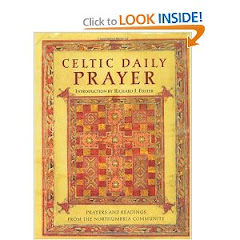
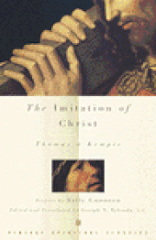
“Seek the ancient paths,” says the book of Celtic Daily Prayer, and it like the Bible and other classics of Christian literature, encourage us toward that life that Brother Lawrence called “practicing the presence of God.” Perhaps like no other written work, aside from the Bible itself, The Imitation of Christ gives us clear and challenging direction in living life as a follower of Jesus. Among the classics of Christian devotional and spiritual literature, the Imitation stands out and has been the #1 companion to the Bible for many of our “great cloud of witnesses.” The Imitation was written as a “beginner’s” guide to monastic life. It is constructed in devotional fashion, with shorter readings that lend themselves to “lectio divina” (divine listening or meditation).
If there is one clear theme throughout the Imitation, it may be that of humility? But closely followed is that of disdain for things of the world; from material possessions, to idle chatter and gossip, to desires of the flesh including power and authority. The Imitation commands us daily to lay down our worldly lives; it challenges and convicts us of sin . . . daily, continuous sin that dogs us throughout our days. One cannot read the Imitation without sensing the Spirit’s conviction, and done so on a daily basis is the stuff of spiritual formation . . . the life and times of a disciple of Jesus Christ.
I cannot recommend too highly the practical, daily use of the Imitation in conjunction with one’s Bible, (and perhaps a book of daily or common prayer.) To “wet” the appetite for consuming the Imitation I include the following excerpts:
“What good does it do you to be able to give a learned discourse on the Trinity, while you are without humility and, thus, are displeasing to the Trinity? . . . I would rather experience repentance in my soul than know how to define it. . . If you knew the entire Bible inside and out and all the maxims of the philosophers, what good would it do you if you were, at the same time, without God’s love and grace?”
“It is vanity to seek riches that are sure to perish and to put your hope in them. It is vanity to pursue honors and to set yourself up on a pedestal.”
“Whenever you desire anything inordinately, you immediately find that you grow dissatisfied with yourself. Those who are proud and avaricious never arrive at contentment; it is the poor and the humble in spirit who live in great peace.”
“Anyone who is not dead to himself will soon find that he is tempted and overcome by piddling and frivolous things.”
“Do not take pride in your skills and talents lest you offend God, to whom you owe these very gifts and endowments.”
“Peace dwells in the humble heart, while in the heart of the proud man there is envy, resentment and strife.”
Oh my Book 1, Chapter 14 is so full of wisdom I hesitate to include even an excerpt here, go buy the book and read it! Also, many of you will note that the Imitation is full of Scripture references, not by accident.
“If you wish to keep peace and live in harmony with others, you must learn to abdicate your will in many things. It is no small matter to live as if in a monastery within your own congregation and abide there without complaint and persevere faithfully until death.”
“We ought not place too much trust in ourselves because we are often without grace and understanding. . . “
“Jesus today has many lovers of His heavenly kingdom, but few of them carry His cross.”
“Many love Jesus as long as adversity does not touch them and many praise and bless Him as long as they receive consolation from Him.”
Well, that is a sample of the tough teachings contained in the Imitation. I hope you will find, as I have, that God’s Truth rings clear and loud within those pages, and it compels us to pray and seek the transformation that only the Spirit can make in our lives. We will be asked over and over again to avoid idle gossip and chatter of worldly things, to let go of our selfish need to be “right” all the time, we will be challenged to hold loosely to temporal things of this world and tightly to Christ, we will be convicted in our pride and pray for humility of the Son, we will begin to see ourselves as the wretched sinners we are, and pray, “Lord have mercy!”
“Seek the ancient paths,” says the book of Celtic Daily Prayer, and it like the Bible and other classics of Christian literature, encourage us toward that life that Brother Lawrence called “practicing the presence of God.” Perhaps like no other written work, aside from the Bible itself, The Imitation of Christ gives us clear and challenging direction in living life as a follower of Jesus. Among the classics of Christian devotional and spiritual literature, the Imitation stands out and has been the #1 companion to the Bible for many of our “great cloud of witnesses.” The Imitation was written as a “beginner’s” guide to monastic life. It is constructed in devotional fashion, with shorter readings that lend themselves to “lectio divina” (divine listening or meditation).
If there is one clear theme throughout the Imitation, it may be that of humility? But closely followed is that of disdain for things of the world; from material possessions, to idle chatter and gossip, to desires of the flesh including power and authority. The Imitation commands us daily to lay down our worldly lives; it challenges and convicts us of sin . . . daily, continuous sin that dogs us throughout our days. One cannot read the Imitation without sensing the Spirit’s conviction, and done so on a daily basis is the stuff of spiritual formation . . . the life and times of a disciple of Jesus Christ.
I cannot recommend too highly the practical, daily use of the Imitation in conjunction with one’s Bible, (and perhaps a book of daily or common prayer.) To “wet” the appetite for consuming the Imitation I include the following excerpts:
“What good does it do you to be able to give a learned discourse on the Trinity, while you are without humility and, thus, are displeasing to the Trinity? . . . I would rather experience repentance in my soul than know how to define it. . . If you knew the entire Bible inside and out and all the maxims of the philosophers, what good would it do you if you were, at the same time, without God’s love and grace?”
“It is vanity to seek riches that are sure to perish and to put your hope in them. It is vanity to pursue honors and to set yourself up on a pedestal.”
“Whenever you desire anything inordinately, you immediately find that you grow dissatisfied with yourself. Those who are proud and avaricious never arrive at contentment; it is the poor and the humble in spirit who live in great peace.”
“Anyone who is not dead to himself will soon find that he is tempted and overcome by piddling and frivolous things.”
“Do not take pride in your skills and talents lest you offend God, to whom you owe these very gifts and endowments.”
“Peace dwells in the humble heart, while in the heart of the proud man there is envy, resentment and strife.”
Oh my Book 1, Chapter 14 is so full of wisdom I hesitate to include even an excerpt here, go buy the book and read it! Also, many of you will note that the Imitation is full of Scripture references, not by accident.
“If you wish to keep peace and live in harmony with others, you must learn to abdicate your will in many things. It is no small matter to live as if in a monastery within your own congregation and abide there without complaint and persevere faithfully until death.”
“We ought not place too much trust in ourselves because we are often without grace and understanding. . . “
“Jesus today has many lovers of His heavenly kingdom, but few of them carry His cross.”
“Many love Jesus as long as adversity does not touch them and many praise and bless Him as long as they receive consolation from Him.”
Well, that is a sample of the tough teachings contained in the Imitation. I hope you will find, as I have, that God’s Truth rings clear and loud within those pages, and it compels us to pray and seek the transformation that only the Spirit can make in our lives. We will be asked over and over again to avoid idle gossip and chatter of worldly things, to let go of our selfish need to be “right” all the time, we will be challenged to hold loosely to temporal things of this world and tightly to Christ, we will be convicted in our pride and pray for humility of the Son, we will begin to see ourselves as the wretched sinners we are, and pray, “Lord have mercy!”
Friday, May 21, 2010
conviction
Often, I find the words I "love" the most, also "hurt" the most?! Conviction by God's Spirit can be very uncomfortable, but when it leads to confession and repentance . . . Oh the freedom in God's forgiveness and mercy. [Inspired by many chapters in 'The Imitation of Christ'.]
Wednesday, May 19, 2010
Disciple . . . disciplines
I am constantly reminded (by the "circuit judge" in my brain, aka Holy Spirit) that we can't/won't "Go", we can't/won't obey until Christ is formed in our inner being; our hearts! Jesus first said, "Come", and only later said "Go", after he had made disciples of his "motley crew". Yes, spiritual formation is the "work" of the Holy Spirit, but we must cooperate with the Holy Trinity through the "disciplines" if we are to become "imitations of Christ". The "church" can't make disciples . . . but, it can teach individuals how to partner with God to become a disciple.
Tuesday, May 18, 2010
let love be your motive
God notes the love the that impels the action and not the number of works done. [He does much who loves much.] We inquire about how much a man might have accomplished in life but never seek the motives that led him to act, asking whether he is poor in spirit, meek and patient, or how devout he is. Grace views his in...ward reality, while nature looks at the outside, but Grace is never deceived.
Saturday, May 15, 2010
healing from the past, blessing for the future, JOY in the now:
Sit somewhere where you can see birds. (If that is not possible then imagine a crowd of seagulls in the sky, floating on the wind, wheeling, crying out their lonesome call of forgotten summers.) As you count the birds associate them each with the name of Jesus and the year of your life. The first bird you will tag 'Jesus, when I was 1' (or, if you prefer, do this in random order so it might be 'Jesus, when I was 17'). Whether you knew it or not Jesus was alongside you in every year of your life, and able to see without any distortion, but with full awareness of our joy and pain. He is with us now. If, as you label the birds and name the years, any hurtful event comes to mind, it is vital to lift it up and let it fly to God with as much love as you can manage in the name of Jesus.
Aidan Clarke and Andy Raine from Celtic Daily Prayer
Jesus, bless my conception.
Jesus, bless my time in the womb.
May the peace of the birth of Jesus be on my birth.
I present my whole being to Jesus.
May Jesus be in all the suffering of my life.
May Jesus heal me by His stripes.
Jesus, crown me with glory, praise, honour and thanksgiving.
Jesus, teach me to carry my cross and follow You.
Lord Jesus, receive my spirit.
Jesus, bless me in my daily death.
Jesus, bless me in my final death.
Jesus, give me a power of resurrection in each day of my life.
Jesus, be with me all my days.
Jesus, fill me with the Holy Spirit.
Jesus, lead me from earth to heaven.
Jesus, make me the person I am meant to be.
Aidan Clarke from Celtic Daily Prayer
Aidan Clarke and Andy Raine from Celtic Daily Prayer
Jesus, bless my conception.
Jesus, bless my time in the womb.
May the peace of the birth of Jesus be on my birth.
I present my whole being to Jesus.
May Jesus be in all the suffering of my life.
May Jesus heal me by His stripes.
Jesus, crown me with glory, praise, honour and thanksgiving.
Jesus, teach me to carry my cross and follow You.
Lord Jesus, receive my spirit.
Jesus, bless me in my daily death.
Jesus, bless me in my final death.
Jesus, give me a power of resurrection in each day of my life.
Jesus, be with me all my days.
Jesus, fill me with the Holy Spirit.
Jesus, lead me from earth to heaven.
Jesus, make me the person I am meant to be.
Aidan Clarke from Celtic Daily Prayer
Subscribe to:
Posts (Atom)